Price (Accessories)
Our first roasting day for this coffee: 2026/September/9(Wed)
*Please kindly note that any order that includes this product will not be shipped out until 2026/September/11(Fri.).
*1kg packaging will be in our wholesale bags.
| Roast Level | Medium-light |
|---|---|
| Country | El Salvador |
| Region | San Ignacio, Chalatenango |
| Factory | Finca Don Jaime |
| Owner | Jaime Guevara |
| Altitude | 1,400-1,500m |
| Variety | Pacas |
| Process | Natural |
| Flavor note | Floral, Plum, Passion fruit, Prune, Peanut, Chocolate |

This is our fourth year working with Jaime-san at Kurasu, and his Pacas Natural has become a staple in our coffee lineup.
One of the fascinating things about coffee as an agricultural product is how, even with the same variety and processing method, subtle nuances in flavor can change from year to year.
This year's lot has a lighter impression than last year's, with floral aromas, a pleasant plum-like acidity, and a gentle sweetness reminiscent of boiled peanuts that lingers in the finish.
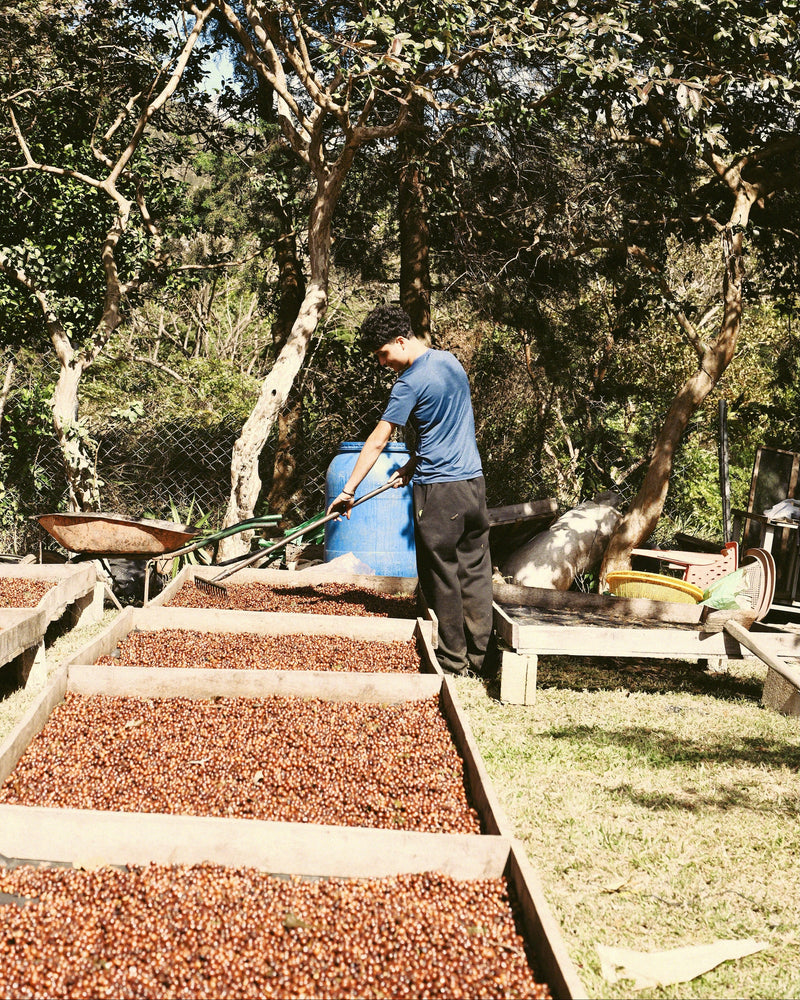
Careful drying on African beds over approximately 35 days results in a clean fermentation character and a soft texture.
We'll be serving this year's lot as espresso at our cafes again. Paired with milk, it makes for a latte with an even more floral and gentle character. We hope you'll give it a try.

San Ignacio, in the department of Chalatenango in northern El Salvador, lies close to the border with Honduras. At an elevation of 1,400–1,500 meters, Jaime Guevara produces coffee at Finca Don Jaime.
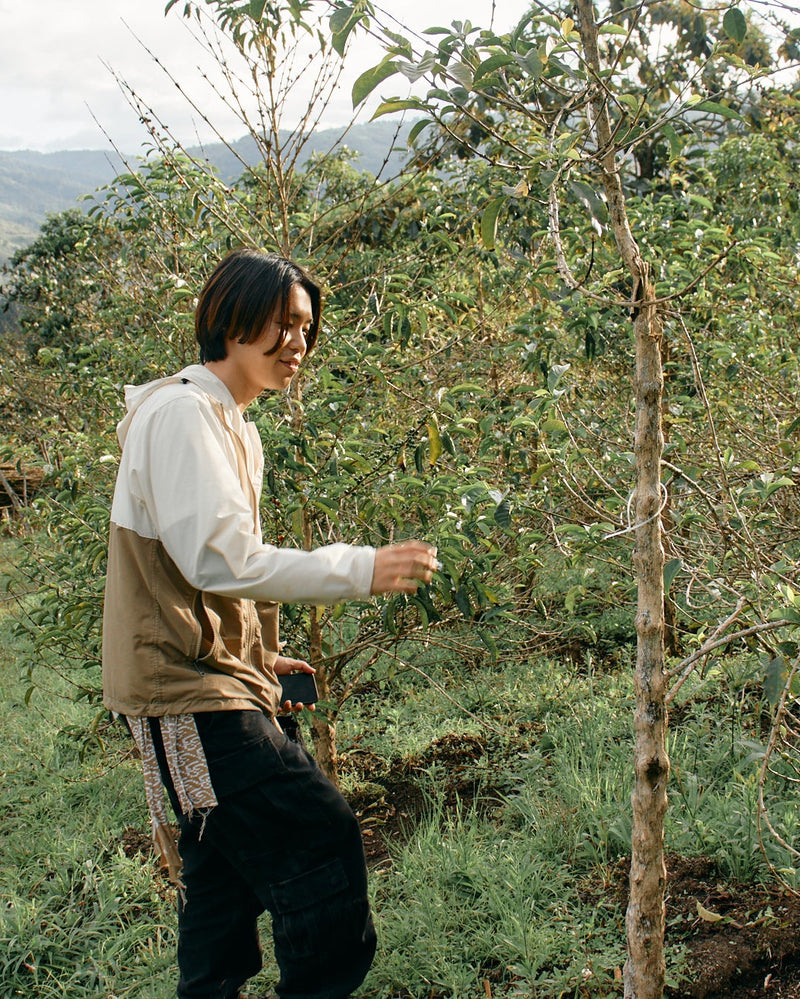
In January 2026, our team visited Jaime-san at his home. Surrounded by nature, the house and every corner of its garden are carefully tended, reflecting the sincerity and care he brings to his work and everyday life.
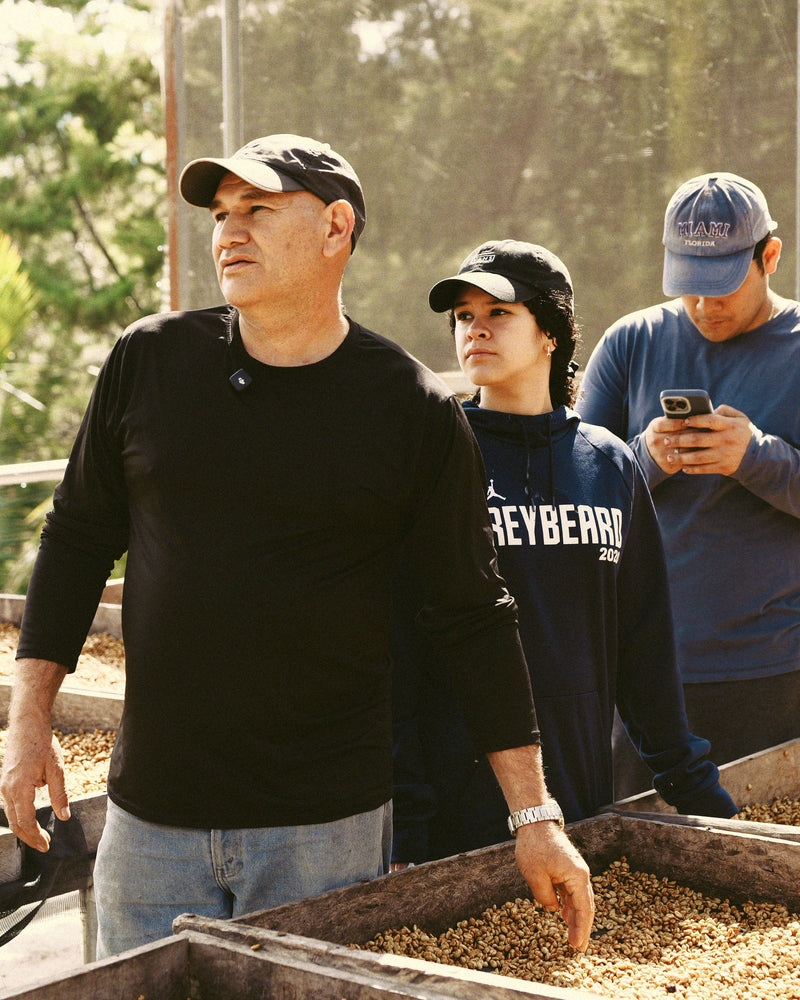
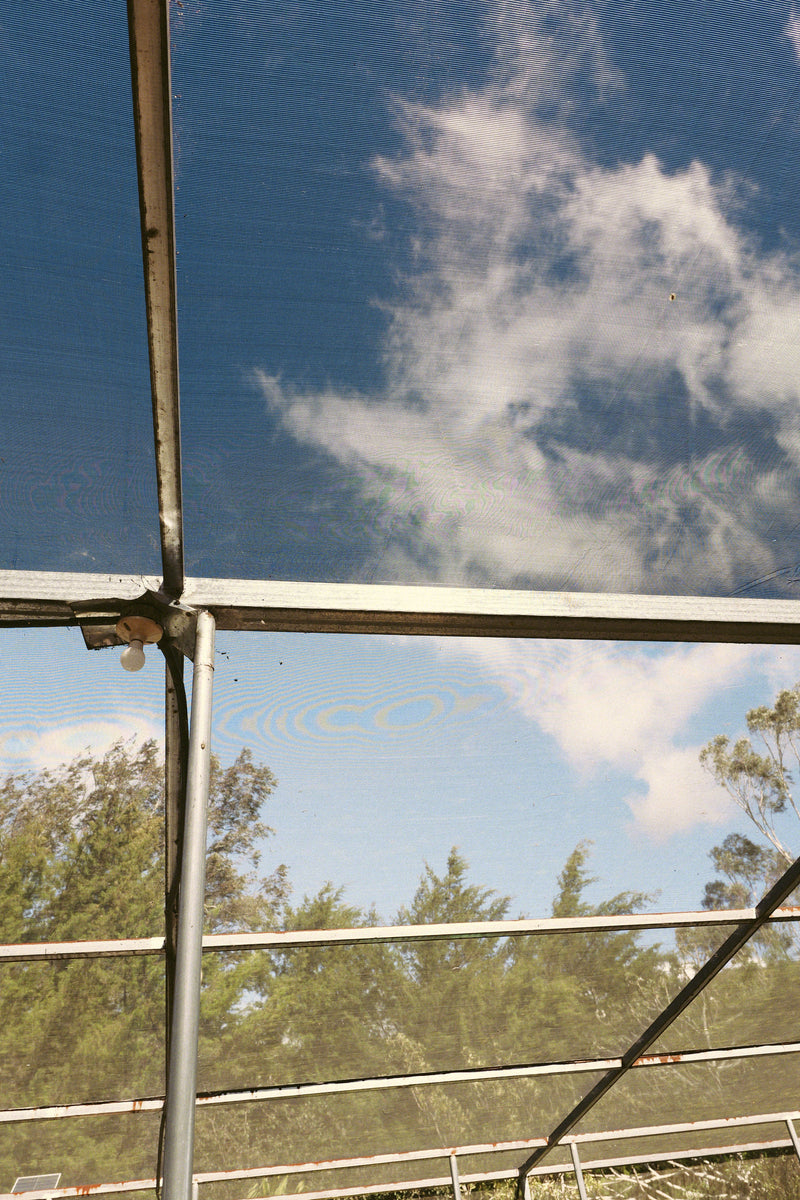
Perhaps the clearest expression of Jaime-san's approach to coffee production is the processing facility attached to his home. Drying areas are seamlessly integrated into his living space, from the garden to the rooftop, giving us a real sense of what it means to "process coffee at home." Rather than pushing to expand production, he carefully processes each batch within the volume he can manage at home. His son, who is currently studying at a university in Canada, also returns home during the harvest season to help on the farm.

For the drying process, the harvested cherries are exposed to direct sunlight only for the first few days. After that, the amount of sunlight is gradually reduced as they continue to dry. On the rooftop, Jaime-san uses two types of shade cloth with different levels of light reduction, choosing between them depending on the condition of the coffee. While conventional sun-drying on a patio may take around 11 days, he dries his coffee slowly over approximately 35 days. By drying it in a way that keeps water activity low, he is able to preserve the coffee's flavors while reducing the risk of mold and dry, faded flavors. Although this method requires considerable time and effort and is practiced by relatively few producers, Jaime-san has continued this slow-drying approach for many years.
To determine when the coffee is sufficiently dry, Jaime-san relies not only on measurements but also on the intuition he has developed over many years. "I can pretty much tell by biting it," he says. By checking how the coffee feels to the touch, how it feels when he bites it, and how it changes from day to day, he meticulously dries it to his target moisture content of approximately 11%. After harvesting, the cherries are also floated in water to remove floaters, selecting only the denser cherries for processing.

The export of this lot is handled by J. Raul Rivera S.A. de C.V., based in Chalatenango. Its representative, Raul Rivera, is himself a coffee producer who runs Finca Santa Rosa. At the same time, he works with small-scale producers in the surrounding area, whose farms can be difficult to access and whose production volumes are limited, handling everything from processing and lot management to export.
After Jaime-san's coffee is dried at the farm with care, it is transported to Raul-san's processing facility. There, it goes through multiple stages of quality control, including parchment hulling, screen sorting, density sorting, optical sorting, and hand-picking, before being managed as individual lots. Once prepared for export, the coffee is shipped by container to Japan.
In addition to specialized education in agriculture, Raul-san also holds an MBA, and supports the region's coffee industry from both the farm management and export sides. He has also been involved in developing the next generation, welcoming interns from his alma mater and giving lectures. By connecting the work of each individual producer with overseas buyers while conveying the background and unique character behind their coffees, Raul-san plays an essential role in the coffee community of Chalatenango.

We use cookies on our website to give you the best shopping experience. By using this site, you agree to its use of cookies.