History of Los Nogales Farm: The Legacy of Ricaurte Hernández
“I made the decision to start a business around coffee, but I always thought that this had to be profitable, that it provided decent employment, that it had a professional level, that it was well paid, and that it encouraged people to continue studying.” — Oscar Hernández
Los Nogales Farm is located in the village of El Diamante, in Brussels, one of the largest corregimientos in Colombia. Surrounded by green mountains and thick clouds, the area holds the story of the Hernández family and their coffee-growing legacy.
Around 80 years ago, as the district of Brussels was taking shape, Ricardo Hernández and Concepción Castillo arrived from Nariño and settled on fertile land. They built a family and raised eight children, all connected to rural life.
Ricaurte Hernández, the youngest son, was born in 1952. He learned generosity, humility, and determination from the land. He devoted his life to coffee farming and dreamed of seeing his children grow up on the farm with the values he had learned.
Ricaurte later met Suldery Arango in Valle del Cauca. Together, they built a family business with their children: Olga Lucia, John Fredy, Liliana, Nancy, Paola, Oscar Fernando, Patricia, and Angie Julieth.
His leadership extended beyond the farm. He served as president of the community action board and worked in close partnership with the local community. In the 1990s, the family briefly moved to Caquetá, but after an unsuccessful attempt to shift into cattle, they returned to their land.
In 2005, Colombia’s specialty coffee scene changed with the first Cup of Excellence competition. Out of more than 280 lots, Los Nogales, led by Ricaurte Hernández, won first place. International judges praised the coffee as the best among all the entries. Oscar Hernández later reflected that the contest marked a turning point, creating a “before and after” moment for specialty coffee in the region.
Ricaurte’s passion for adding value to specialty coffee, improving soil practices, and finding new ways to do business was passed on to the next generation.
The Coffee Plantation Mourns Its Loss
Violence has long affected rural Colombia, and this story was no exception. On February 17, 2013, while Ricaurte was traveling to Los Nogales, armed groups killed him.
Ricaurte was remembered as a pioneer of high-quality coffee and a symbol of courage and perseverance. The loss was felt by the family and by the wider community. After the tragedy, the family decided to sell the farm to support Suldery’s well-being.
However, Oscar Fernando, who was serving in the Colombian Navy at the time, chose to leave his military career and take responsibility for his father’s legacy.
“For me, the best way to heal those wounds was to return to the farm, continue his legacy, and feel him close. I believe he is proud of what we are doing as a family.” — Oscar Hernández
The Third Generation: Producer Story
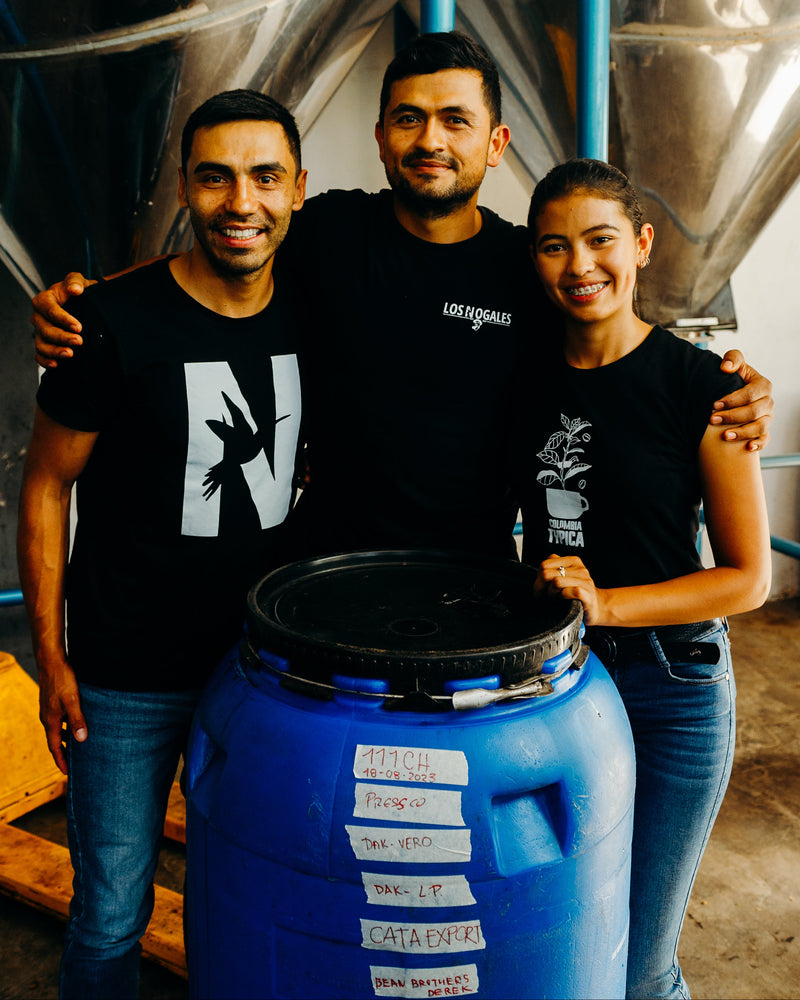
Oscar Fernando Hernández is an industrial engineer and a former naval non-commissioned officer. He is the youngest of Ricaurte’s children and now leads the family project.
Although his childhood was deeply tied to the Laboyos Valley, strict upbringing made farm work feel like a punishment for a time. Ricaurte wanted his children to have professional opportunities and a better quality of life, and he supported Oscar Fernando in joining the Navy.
Oscar Fernando later described how time away from the farm helped them value freedom, the countryside, family, and home. Before enlisting, Oscar Fernando studied environmental management at SENA, building a foundation in sustainability, reuse of materials, clean production, and environmental protection.
“Every time I came on vacation, I helped my father with his work. I bought some lots. My project was always to return to the farm.”
After Ricaurte’s death, Oscar Fernando returned with a clear purpose: to implement research, innovation, and environmental protection while generating employment in the region.
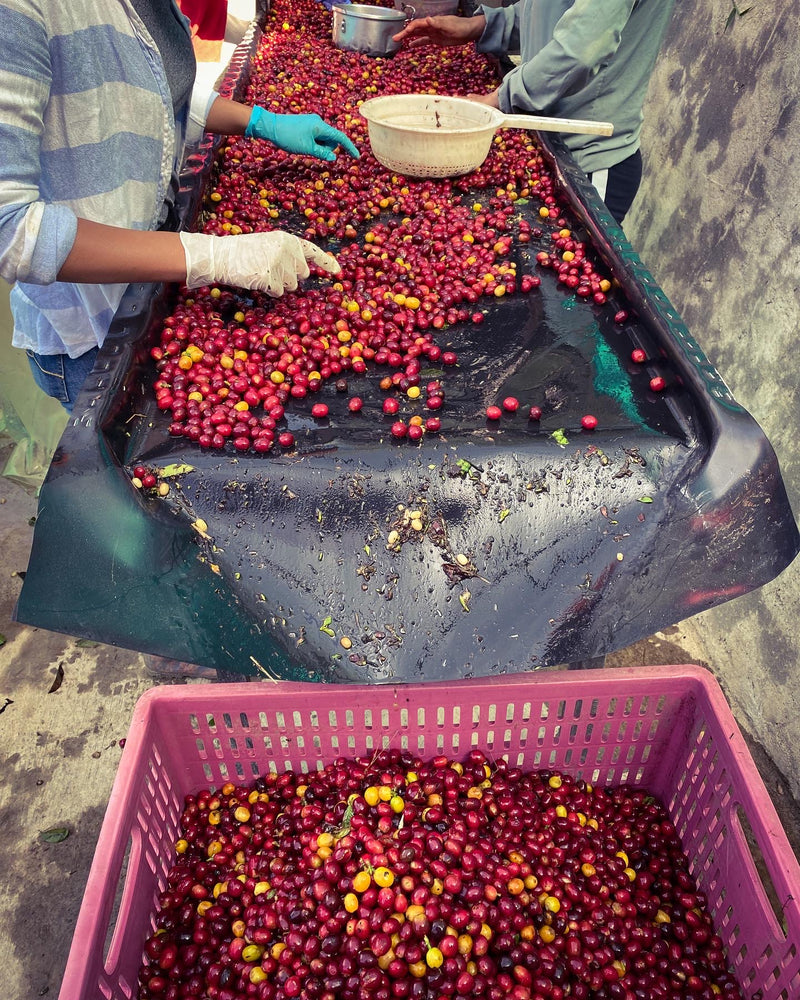
Los Nogales became a research and innovation center, producing technology and biotechnology to improve production systems, pulping, processing, drying, and transportation. The project aims not only to produce high-quality coffee, but also to develop technology that supports the next stage of Colombia’s specialty coffee evolution.
History of Los Nogales Coffee
The mountains of Los Nogales are home to diverse coffee varieties, including Geisha, Caturra, Colombia, Cenicafe, yellow and pink Bourbon, Tabi, Hava, Bourbon Pimienta, and Typica.






![[Premium]Colombia Oscar Hernandez Bourbon Pimienta[Light roast]](http://kurasu.kyoto/cdn/shop/files/image_Beans_Premium-Colombia-Oscar-Hernandez-2026_2048x.jpg?v=1781072256)
![[Premium]Colombia Oscar Hernandez Bourbon Pimienta[Light roast]](http://kurasu.kyoto/cdn/shop/files/Premium_Colombia_Oscar_Hernandez_2026-100_1_2048x.jpg?v=1781071703)
![[Premium]Colombia Oscar Hernandez Bourbon Pimienta[Light roast]](http://kurasu.kyoto/cdn/shop/files/image_Beans_Premium-Colombia-Oscar-Hernandez-2026_en_2048x.jpg?v=1781072304)
![[Premium]Colombia Oscar Hernandez Bourbon Pimienta[Light roast]](http://kurasu.kyoto/cdn/shop/files/ColombiaOscarHernandezBourbonPimienta2026-100_1_2048x.jpg?v=1781072273)
![[Premium]Colombia Oscar Hernandez Bourbon Pimienta[Light roast]](http://kurasu.kyoto/cdn/shop/files/Nogales-Anibal_OscaryAngie_2048x.jpg?v=1781072327)
![[Premium]Colombia Oscar Hernandez Bourbon Pimienta[Light roast]](http://kurasu.kyoto/cdn/shop/files/OSCARHERNANDEZ_4_2048x.jpg?v=1781071689)
![[Premium]Colombia Oscar Hernandez Bourbon Pimienta[Light roast]](http://kurasu.kyoto/cdn/shop/files/OSCARHERNANDEZ_5_2048x.jpg?v=1781072295)