

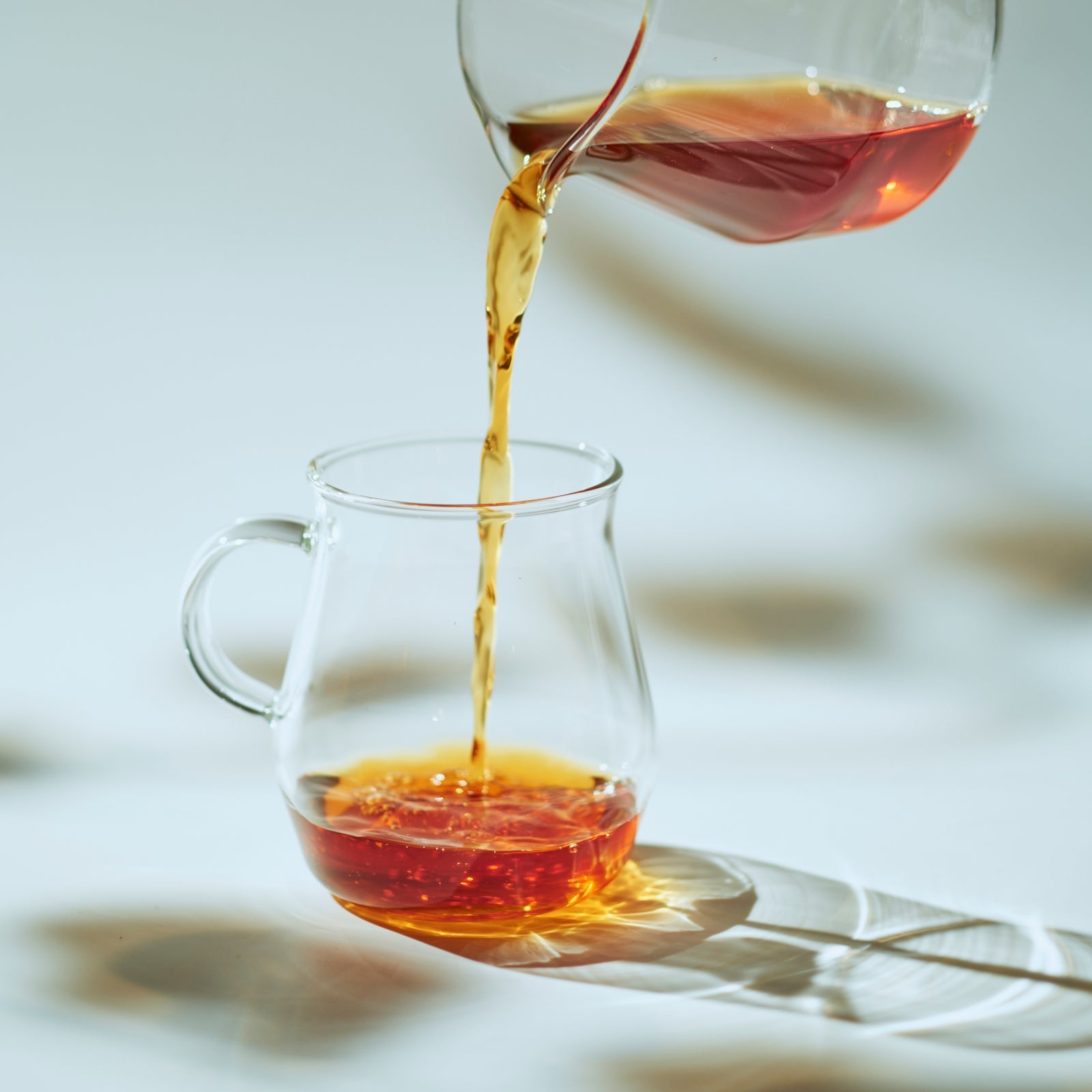














When you hear “Thai coffee,” what flavors come to mind?
Something fruity? Or soft, gentle, and easy to drink?
In the mountains near Chiang Rai in Northern Thailand, Ayo-san and Mika-san are part of a new generation of coffee producers working closely with Akha Ama Coffee. At Kurasu, we are proud to share their coffees with our community.
Their family, once tomato farmers, now produces coffee that attracts the attention of roasters around the world.
Behind this transformation lies the long-standing network of trust built by Lee-san and Jenny-san of Akha Ama Coffee—connecting communities, empowering young producers, and nurturing the future of Thai coffee.
We shared the beginning of this story in Part 1.
In this second part, we shine a light on the challenges Ayo & Mika have taken on, and the future of Thai coffee as they see it from the ground level.
<Read Part 1: The Journey of Akha Ama Coffee>
Interview with Ayo-san & Mika-san
— What were you doing before starting your coffee farm?
Mika: I worked at Akha Ama Coffee for five years, then at another cafe for two years.
When I was attending vocational school, I met Ayo.
After we got married, we decided to start a coffee farm together.
Ayo: I’ve been farming since I was a child.
Before coffee, my family grew tomatoes, plums, and other crops.
We’ve actually been involved with coffee for about 24–25 years as a family.

(Photo: Ayo-san on the right, Mika-san on the left)
— How did you begin working with Akha Ama Coffee?
Mika: I asked Jenny, “Ayo’s family is growing coffee—what do you think?”
I don’t remember exactly whether our first order from Akha Ama was 500kg or 2,000kg, but we were nervous because it was our first real transaction.
We sent several samples and received a lot of feedback.
By applying their advice and improving our processes, we were able to produce 10,000kg of coffee last year.
— How long have you been working seriously as coffee producers?
Ayo: It has been eight years since we began focusing intensively on coffee.
We wanted to grow further, so we reviewed many aspects of our farm—starting with rebuilding the soil preparation that my parents had used, and also replanting varieties like Geisha and Java.
— What drives you to put so much effort into coffee?
Mika: In our area, very few people were taking coffee seriously at the time.
At first, it was just the two of us, producing 4,000–5,000kg with what we had.
Jenny told us, “We can buy from you, but maybe not in large quantities”—so in order to be part of Akha Ama’s lineup each year, we needed to improve both quality and volume.
Gradually, 2–3 roasters began taking notice, and we received orders of 1,000–2,000kg.
We realized: If we make good coffee, roasters will find us.
That gave us confidence, and the motivation to pursue higher quality year after year.

(Photo: Lee-san serving coffee at the Kurasu booth during SCAJ 2025)
Ayo: Sometimes the roasters introduced by Jenny or Lee request specific processes.
We send the coffee we produce, receive detailed feedback, and refine our methods based on that.
Improving after each harvest has become one of our priorities.
— What varieties and processes are you producing now?
Ayo & Mika: For processes, we produce classic styles such as washed and honey, as well as more experimental ones like anaerobic natural and semi-washed.
Our main varieties are Catuai and Caturra/Catimor, and we’ll begin planting Java and Batian next year.

— How do you feel about working with Kurasu?
Mika: Having Kurasu continue to use our coffee has definitely raised our standards.
Knowing that our coffee is recognized and used abroad gives us a deep sense of pride—and it drives us to make the next year even better.
Ayo: The concrete feedback we receive from roasters directly contributes to our improvements.
As a result, I think we’ve become a model within our community of how a farm can transition toward coffee-focused agriculture.
— What is your vision going forward?
Mika: We want to explore the best combinations of variety and process.
Through all our experiments, we’ve gained a clearer sense of “This process brings out this kind of flavor,” and now we want to confidently express our own identity through our coffee.
Ayo: We want to refine both soil preparation and post-harvest processing even further.
Our goal is to become producers who can consistently deliver small but high-value lots.
———————————
Thank you, Ayo-san and Mika-san.
You can try the coffee produced by this next-generation couple at Kurasu.
We hope you enjoy the distinct flavors that reflect their passion and dedication.
Text: Production team, Ratchatajaroentad Ponrawit(a.k.a. Moo)


